
We woke up from a long first day in Krakow. We were all pretty fresh as well considering the amount of Tyskie we consumed the night before (Fantastic Beer by the way). We were all hungry though, so we showered and set off in pursuit of some breakfast.
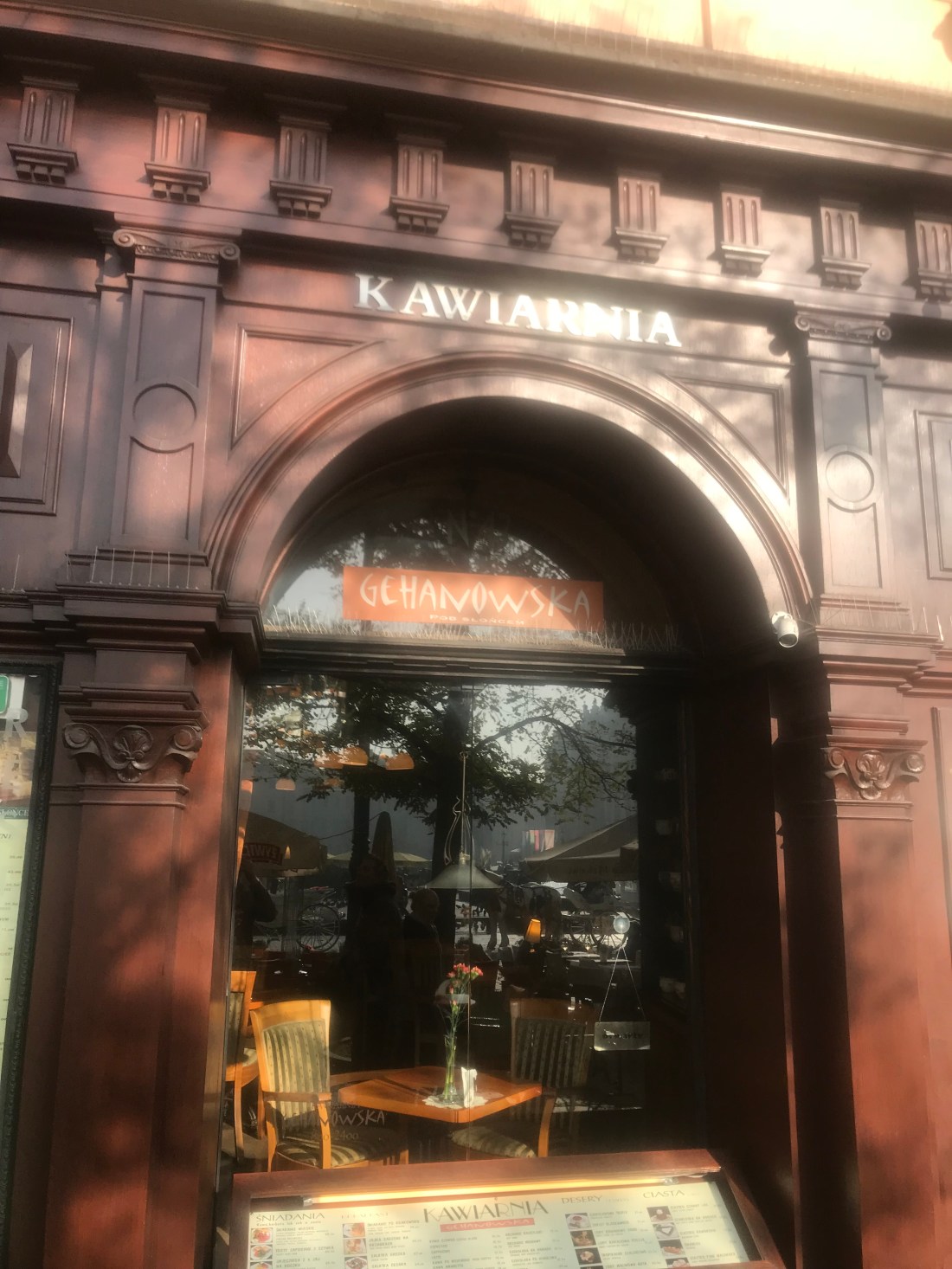
We thought the best place to look for breakfast would be the Market Square. We looked at various menu’s of the different cafe’s and restaurants before deciding to eat at a restaurant called Gehanowska – Pod Sloncem. Although it is November, The weather was very mild and quite warm. This allowed us to sit outside and eat breakfast whilst watching the world go by. For breakfast I ordered an English breakfast (as Yorkshire people do), this consisted of : One fried egg with Grilled bacon, Fried champignones, white sausage, 2 toast and kidney beans, this costing around 30zl (£6). I had absolutely no complaints, the food was perfect and one of the best sausages I have eaten.
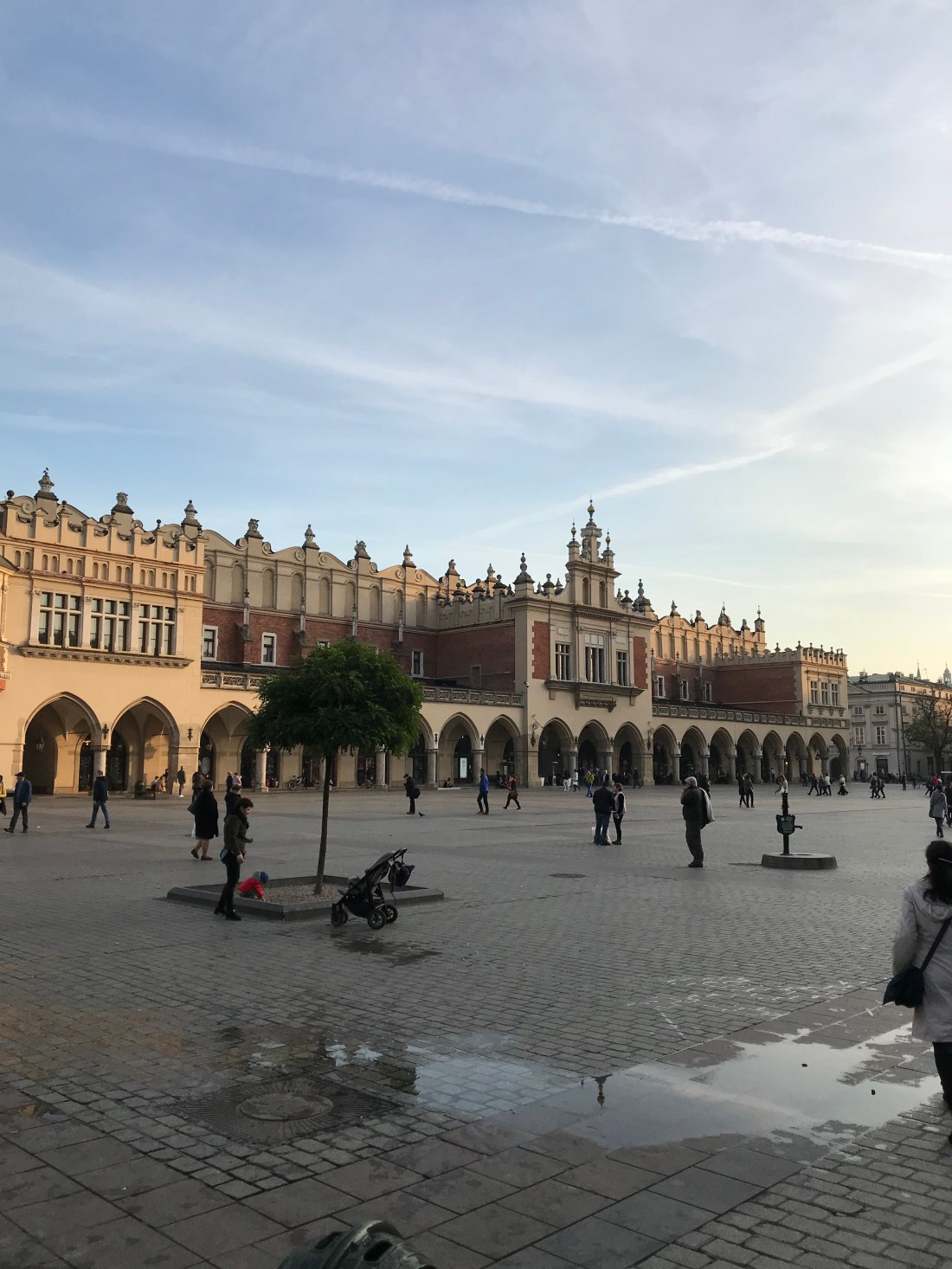
Whilst eating breakfast we planned the day ahead. Because we had taken the buggy ride the day before we had a good idea of the things we wanted to see. We had an hour walking around the market Square and looking in the little shops and market stalls. We then made our way over to the Bazylika Mariacka W Krakow (St Mary’s Basilica). We went to the booking shop next to the church and asked to do the tour and tower. Unfortunately the tower was fully booked up so we had to settle for entry to the church only (10zl – £2).
Saint Mary’s Basilica is a Brick Gothic church adjacent to the Main Market Square in Kraków. Built in the 14th century, its foundations date back to the early 13th century and serve as one of the best examples of Polish Gothic architecture. Standing 80 m (262 ft) tall, it is particularly famous for its wooden altarpiece carved by Veit Stoss (Wit Stwosz).
On every hour, a trumpet signal—called the Hejnał mariacki—is played from the top of the taller of Saint Mary’s two towers. The plaintive tune breaks off in mid-stream, to commemorate the famous 13th century trumpeter, who was shot in the throat while sounding the alarm before the Mongol attack on the city. The noon-time hejnał is heard across Poland and abroad broadcast live by the Polish national Radio 1 Station.
Saint Mary’s Basilica also served as an architectural model for many of the churches that were built by the Polish diaspora abroad, particularly those like Saint Michael’s and Saint John Cantius in Chicago, designed in the Polish Cathedral style.
The church is simply STUNNING. Although I am not religious or an architect, I was amazed by it. The size, the colours, the sculptures. It is simply stunning. I have visited the Sagrada Familia Basilica in Barcelona although probably more famous than St Mary’s, St Mary’s is better. All money raised from the admission fees goes to restoring the church for future generations. It was probably the best £2 I have ever spent.
When we came out of the church, we walked around looking at the buildings and square connected to the church,


We then decided to head towards the Old Jewish Quarter. We initially planned to hire bicycles for the day but decided to walk instead. To get to the Jewish Quarter on foot takes around 20 minutes. Along the way are lots of Cafe’s, restaurants & shops. We called in a few shops for a browse, Ben was still hungry (as always) so he bought a pretzel. We took a slight detour and visited the Jewish Cemetery, I say a detour, reality is we got lost (blame Ben, Mr Tom Tom himself). We arrived at the Old Jewish Quarter (Kazimierz) about an hour after setting off. Here you find an array of restaurants, bars, street stalls etc. We bought some mini ornaments and watercolour prints from one of the street stalls, all for around 15zl (£3). There is also lots of taxi’s available here, and is a stop off for the buggy tours. At the end of the square is The Old Synagogue and Museum.
The area is very peaceful and calm and a perfect place to sit outside for food and drinks. The Ariel Hotel & restaurant is where Spielberg stayed whilst filming Schindlers List.
Kazimierz – the district south of the Old Town between the Wisła River and ul. Dietla (where a tributary of the Wisła once flowed) was the centre of Jewish life in Kraków for over 500 years, before it was systematically destroyed during World War II. In the communist era it became one of Kraków’s dodgiest districts while gradually falling into disrepair. Rediscovered in the 1990s, thanks to the fall of the regime and worldwide exposure through the lens of Steven Spielberg, Kazimierz has rebounded and is today Kraków’s most exciting district – a bustling, bohemian neighbourhood packed with historical sites, atmospheric cafes and art galleries. Well-known for its associations with Schindler and Spielberg, traces of Kazimierz’s Jewish history have not only survived, but literally abound in the form of the district’s numerous synagogues and Jewish cemeteries.
We stopped and had a few beers and wine at the bar/restaurant next door to Ariel’s called Ester. This is located on Szeroka Street. They had a large selection of beers, wines, spirits and cocktails. We once again sat outside and blankets were provided for every table. They also had outdoor patio heaters to keep us warm. The staff were very pleasant and helpful with any questions we had.
Szeroka Street, which is really more a square than it is a street, represents the heart of the old Jewish district. It was around here, back in the fourteenth century that settlers first laid down their roots in the area and the sense of a medieval market place is still palpable. Two of the most important synagogues are to be found here, the Old and the Remuh, and the latter has a small cemetery attached. A number of cafes and restaurants have sprung up in recent years, and these have an emphasis on Jewish traditions. They are, undeniably, squarely aimed at tourists, but they have been done tastefully, providing a dignified and, at times, vibrant echo of a now lost world.


Szeroka is well preserved and, with its rambling roof-line and quaint merchant houses, it is a deeply evocative place.
In the northern part of the square there is a ring of maple trees. Beneath it one finds a small monument hewn from a large, unprepossessing rock. The inscription reads:
Place of meditation upon the martyrdom of 65 thousand Polish citizens of Jewish nationality from Cracow.
After a few drinks and a look around, we took a walk over the river towards the Ghetto’s and in particular to the Ghetto Heroes Square. This was another places we visited on the city Buggy tour. whilst here we did some sightseeing and spent some time at the square looking at the chairs and reading about the chemist on the corner. This was the first time on the trip that I really thought about what happened to the Jewish people during the war. It gave me (us) an overwhelming feeling of sadness. It really made us realise the horrors of what they must have gone through. (Since returning home, I am reading quite a lot about this area & what happened through the eyes of the people who were there). The Chair display is a way to make people realise, so that it never happens again.
The Chairs in Ghetto Heroes Square – When the jews were asked to leave the ghetto they were told to take their prized possessions and one small suitcase to start a new life. So most took a chair with them to have some where to sit in their new homes. That tram stop at the station next to the square is where they sent them direct to Auschwitz. The chairs are a memorial to remind people of their suffering.


It was now late afternoon and starting to get dark. We decided to get the Tram back to the Old Market Square. These are every 5 minutes or so and cost 1.90zl (£0.40p) each. Please be aware that the tickets are only valid for 4o minutes. There are no conductors that I am aware of on the tram, however there is a machine for you to insert your ticket.
We got off the tram at the Old Market Square and went for a few drinks at the Bull whilst deciding what to have for evening meal. We went to an Italian in the Old Market Square called The Spaghetti. The décor, atmosphere and service and price of the food was really good as was the food. However, the portions were pretty small and we left feeling a little hungry still. We finished the day with a couple of drinks around the square then went back to the apartment (Sober).
Day 3 is Auschwitz/Birkenau.
If you have enjoyed reading this, please read about Days 1 & 3
Krakow – Day 3 -10/11/2018 – Auschwitz/Birkenau


 Boe’s Travels